Showing posts with label PETA. Show all posts

Sunday, January 15, 2012

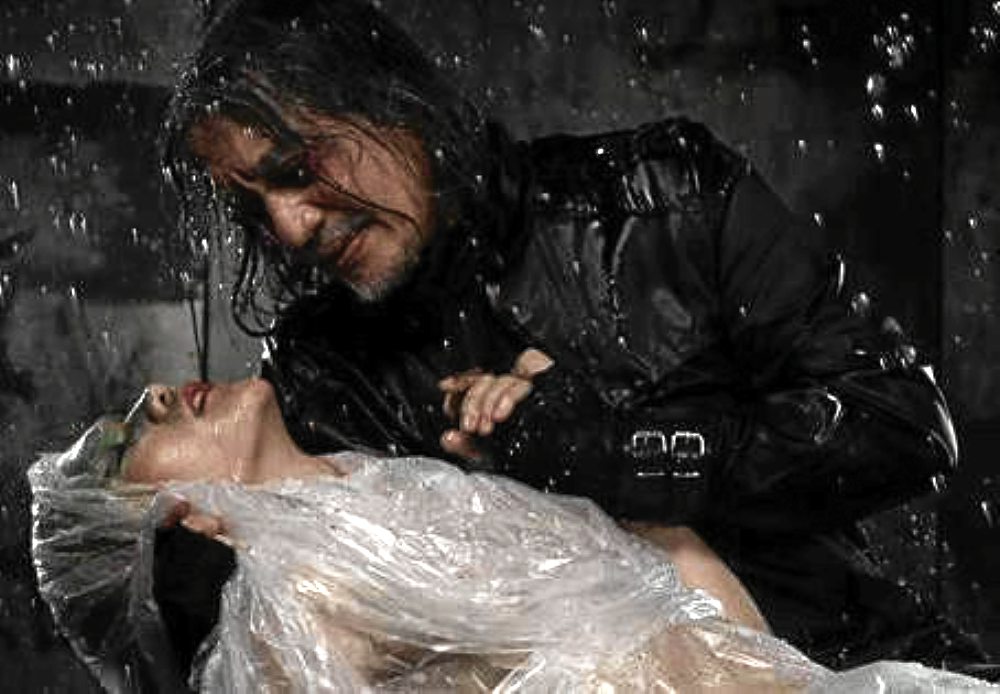
Haring Lear by PETA

"A PROUD MOMENT IN PHILIPPINE THEATER: PETA produces the first Filipino adaptation of William Shakespeare's King Lear!

Exciting, suspenseful and virtually violent, PETA's 'Haring Lear' retains Shakespeare's beautiful and devastating themes of the disintegration of family solidarity, running the gamut of love, madness, death and sacrifice.

Schedule: Friday (7:00PM) Sat-Sun (10:00AM-3:00PM) Jan 27-Mar 4
Tickets: Php350 | Php500 (VIP)
Contact: (02) 7256244, (02) 410021, 0917-5765400, www.petatheater.com" - from PETA
 

Peta stages ‘King Lear’ in Filipino

By:
 

“HARING Lear”

The Philippine Educational Theater Association (Peta) wraps up its 2011-2012 season with a Filipino translation of William Shakespeare’s “King Lear” that opens on Jan. 27, employing an all-male cast.

Felix “Nonon” Padilla directs, using National Artist for Literature Bienvenido Lumbera’s translation of the tale of King Lear, how he bequeaths his kingdom amongst his three daughters and is betrayed by two of them.


When Padilla was asked by Peta artistic director Maribel Legarda to stage a Shakespeare production, he immediately offered “King Lear.”


“It was suggested to me by Salvador Bernal because he’d always wanted to design it,” said Padilla, a longtime collaborator of National Artist for Theater Design Bernal, who passed away October 2011.


Post-apocalyptic setting


Production design duties are being handled by Gino Gonzales, one of Bernal’s protégés, who will build on Padilla’s post-apocalyptic setting.


“Originally, it’s set in prehistoric Britain,” says Padilla. “Shakespeare had very good reasons to set it in that time [instead of his own time] because he was trying to camouflage all of the touchy political issues about the [current] king.”


“I thought it would be interesting to go the opposite. To set it in the future, a future that is as bleak as it was in barbaric or primitive times.”


“It is one of the mature plays of Shakespeare. It’s emotional and riveting,” he says.

“The play is all about legacy. It’s about leaving something behind. It’s about somebody in the grips of mortality and facing mortality. What do you leave behind? You can leave your material wealth, or you can leave your soul, your compassion.”


“In ‘Lear,’ that’s what he learns. He learns to become human. It’s a running theme in Shakespeare, about how a man gets crushed by his own guilt, and ‘Lear’ is a prime example of that.”


Nod to Shakespeare’s text


The decision to use an all-male cast is Padilla’s nod to Shakespeare’s text and the way roles were cast and played during the Bard’s time. (In 2001, director Anton Juan cast Repertory Philippines founder Zenaida Amador as King Lear in his staging of the play.)


“In Elizabethan times, the young boys would always play the female roles,” says Padilla.
He also notes there are two characters in the play that were traditionally played by only one actor. “As written, in the scenes of Cordelia, the Fool is never there. When the Fool is onstage, Cordelia is gone. I think that’s crucial, and since Shakespeare designed it that way, I thought it was important to play around with that, to give it some focus or emphasis.”


Teroy Guzman plays the role of the aging monarch, Haring Lear. Lear’s daughters will be played by Gary Lim (Regan), Nor Domingo (Goneril) and Abner Delina (Cordelia).


“Haring Lear” runs Friday to Sunday, Jan. 27-Mar. 4, at Peta Theater Center. Contact 7256244, 4100821 to 22, 0917-5765400, or petatheater@gmail.com.


Source: http://lifestyle.inquirer.net/31263/peta-stages-%E2%80%98king-lear%E2%80%99-in-filipino

Wednesday, November 16, 2011

Care Divas Re-Run in December 2011

 
Come and watch Care Divas again this December and SHARE the EXPERIENCE with those you love. This is the perfect Christmas gift for your family and friends!

Show dates are as follows: Dec. 1, 8pm | Dec. 2, 3pm | Dec. 4, 8pm | Dec. 8, 8pm | Dec. 9, 3pm. Tickets are PHP 600 (Regular), PHP 800 (VIP - Limited). 

For tickets, contact (02)7256244, (02)4100821-22, 0917-5642433, petatheater@gmail.com
(Source: Peta's Facebook) 

Location: PETA Theater Center. Click here for the map.

In the Philippine Educational Theater Association’s (PETA) latest musical comedy-drama titled “Care Divas,” five transvestite overseas workers travel to the historic land of Israel in the time of the intifada (the Palestinian uprising against Israeli occupation), bringing with them the unique brand of warm Pinoy nurturing to care for elderly Jews.

Every day, they wash, feed and entertain their employers as loving caregivers. Come nighttime, the five whip out their make-up and sky-high heels to perform as glamorous drag queens in a Tel Aviv club.

The day after, they go back to playing the role of caregiver, once again tending to the aged Jews who depend on them for food, human connection and survival.

At the core of the story is Chelsea (Melvin Lee), who seems to have it all--blessed with a kind employer who teaches him Hebrew and a potential lover who accepts him for what he is. Shai (Vincent De Jesus) the leader of the group, is always haunted by the image of his mother who rejected him for his sexuality. The two are joined by Kayla (Jerald Napoles), Thalia (Dudz Teraña, Jason Barcial) and Jonee (Phil Noble, Buddy Caramat) who also release their creativity through performing.

The five strive to adapt to Israeli culture. Their Filipino tongues struggle to learn Hebrew while silently battling the orthodox view on gays. They are always alert, constantly fearing deportation and war.

Armed by their aspirations (and their pointed stilettos), their true spirits and creativity shine through in their performances. They dream of becoming big-time divas while encountering problems along the way. But it is through their journey that they are able to share the valuable experiences and friendships that bind strangers like them in a strange land.

The creative team behind “Care Divas” includes acclaimed writer Liza Magtoto, multi-awarded composer Vincent De Jesus, prolific director Maribel Legarda, costume designer John Abul, events and theater lighting designer Jon Jon Villareal, visual artist and award-winning set designer Leo Abaya and contemporary dancer and choreographer Carlon Matobato.

The cast includes some of the biggest and brightest theater and television actors today: Melvin Lee, Vincent De Jesus, Ricci Chan, Jerald Napoles, Phil Noble, Buddy Caramat, Dudz Teraña, Jason Barcial, Cecilia Garrucho, Paul Holme, Myke Solomon, Angeli Bayani, Eric Dela Cruz and Dom Miclat-Jansen. 

(Source: Gibbs Cadiz) 

Monday, November 7, 2011

"Theater as a Creative Industry" by Joy Virata

This article was published in the business journal of the American Chamber of Commerce of the Philippines, Inc. 
Thank you to Jeremy Domingo of Word of Mouth Theater who shared this article.
Theater as a Creative Industry
By Joy Virata


The author, Joy Virata, recently took on the role of the Narrator in Peter Pan by Stages and Repertory Philippines. Photo Courtesy of Joriben Zaballa at http://www.joriben.com/2011/10/peter-pan-manila-final-flight.html
Some years ago, at different times a couple of years apart, I attended two meetings called by government officials who were involved in the development of the Creative Industry. These meetings were attended by representatives from the different arts including theater, fashion, dance, the visual arts, design, etc. They were meant to discover how the government could facilitate the growth of the industry. At each meeting there were concrete suggestions put forth by the different artistic groups and organizations and after each meeting nothing ever happened.

Some forty or so years ago, Zeneida Amador visualized the creation of a theater industry by establishing Repertory Philippines Foundation, Inc. At that time, besides a few amateur and school theater groups, there were only two professional companies—REP and the Philippine Educational Theater Association or PETA. Today there are many professional theater companies of varying sizes, producing plays and musicals by both local and international playwrights in Tagalog or English. This year will have seen the production of at least sixteen shows all produced, directed, designed, staffed and acted in by Filipinos. These include Next to Normal. Seussical, The Sound of Music, Sweet Charity, In The Heights, Peter Pan, The Little Mermaid, Noli Mi Tangere, Aida, Care Divas, William, Haring Lear, Joy Luck Club, Shakespeare in Hollywood, and 39 Steps.

There is a roster of professional Filipino actors, directors, stage managers and crews, set and costume designers, orchestras, musicians, and other theater workers, from which theater companies regularly draw. It is not unusual for actors to be rehearsing for one production and acting in another. Actors also “moonlight” for corporate functions, or provide voice-overs or the talent for commercials. Some theater actors are hired for bit parts in foreign or local moves. Sometimes they are hired for work in Hong Kong, Macao or Singapore or for a production on a cruise-liner. Once upon a time they also became “Kims” or “Engineers” in Ms. Saigon productions.

Every year new actors are added to the roster. There is never any lack of interest in making theater a full-time profession. There is never any lack of raw talent waiting in the wings – willing to sacrifice their time and often having to use their own money for transportation and food just for the opportunity of being trained—even if actors rarely earn enough to support themselves (much less a family) on what they earn.

Most community theater companies (not Broadway nor the West End) in the United States and England (Fringe) depend on public and private subsidy. In the Philippines, for the most part, we have neither. Theater companies must depend on their own resources to meet escalating costs of production—mostly through the sale of tickets and advertising sponsorships. However these sponsorships have become few and far between—specially since the start of the importation of foreign productions. Every company must be creative at ticket selling and thus each company has their own methods of selling.

All theater companies struggle to survive—some better at it then others—and face similar problems. Advertising is expensive and cannot be covered by the ticket prices that can be charged for local productions. Therefore Manila’s active theater scene is the best-kept secret in town. Lucky ones get advertising help from newspapers but the newspapers can only give so much—usually one or two ads once or twice a month.

There is the usual competition from movies, television, DVD’s, etc., and the natural aversion to fighting traffic on a Friday or Saturday night . One has to experience the difference between plastic imagery and human warmth before he is willing to make the extra effort to see a live performance but how does he get that experience without first being lured into the theater? Building an audience is probably the most difficult job in Manila.

Another problem to face is ticket pricing. Although tickets to local productions cost fraction of what they cost in other countries there is valid reason for students and low wage earners to choose cheaper means of entertainment and theater companies must take this into consideration. A P300 ticket is easy to sell but won’t cover costs. Sponsorships help a ltittle but they are few and far between. Thus regular (not for special fundraising) tickets average between P1000 to P2000 and this requires Individual, man-to-man, ticket selling. It must also be noted that many people seem to begrudge having to pay for a theater ticket and will look for “freebies” and discounted tickets whenever possible.

Then there is there is what I will call “unusual competition” from foreign productions that somehow or other seem to get huge advertising sponsorships unavailable to local productions. These sponsorships allow for advertising on television, radio, newspapers and billboards. Corporations also buy tickets (which are usually four and five times the cost of tickets for local productions) and distribute them free to clients. These companies cannot entirely be blamed for this. Numbers count and imported productions attract more attention then local ones do and therefore provide more advertising coverage. It is very difficult to counter cultural mores that give more value to imported products no matter that local productions may be as good and sometimes better than these imports. Globalization is a good thing but we’ve got just as good a product and we produce it at a much cheaper price so shouldn’t we have some kind of protection so that we get a chance to grow?

During the two meetings that were held on the Creative Industries, two suggestions were put forth on how the government can help the theater industry. The industry needs affordable venues – both for performance and for training and it needs help in publicity. Venues may be hard to come by. Even the CCP must hire out its hall to the highest bidders (foreign companies) in order to survive. Local groups relay on the RCBC Theater, Onstage Theater and the Meralco Theater which are usually fully booked—specially in the second half of the year. But a little help with publicity should be possible. A daily listing of productions in newspapers sponsored by the Department of Tourism or a private company would help a lot. Also, tax exemptions for the importation of materials and equipment needed for cultural activities should be implemented. Exemption from the payment of withholding tax on payments for intellectual property rights and rentals for materials should also be implemented.

One of the most precious resources of the Philippines is the artistic talent, creativity and resourcefulness of its people. Yet it is this resource which receives the least recognition from both the private and public sectors, is seldom looked on as having any material value, is last on any list of priorities and first to be removed when budgets are tight. Still theater workers will continue to give their all and hope that someday this will change.